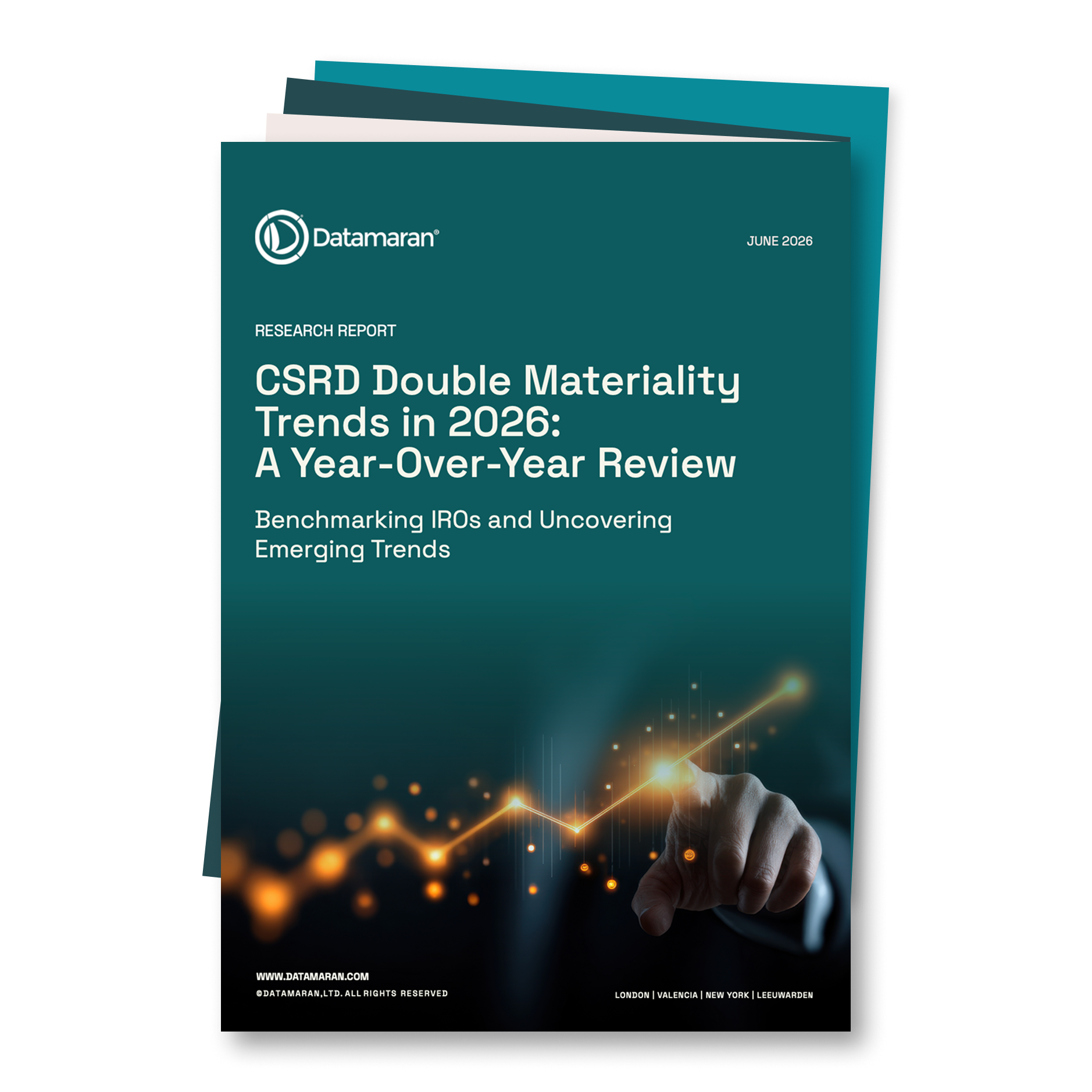
So what do the findings show? Materiality scope is narrowing. Opportunity disclosures are declining. Entity-specific topics are rising fast. And for many organizations, the work of building a truly defensible, decision-useful double materiality assessment continues.
What the Data Reveals
Materiality is moving, but not in the direction you might expect.
88% of companies changed the number of material IROs they disclosed year-over-year. This reflects a market still actively recalibrating, with a split between those making incremental refinements and those undertaking fundamental reassessments.
Downside exposure still dominates disclosures.
Negative impact reporting increased across every ESRS topical standard. For organizations integrating sustainability disclosures into investor communications and risk reporting, a profile dominated by downside exposure raises important strategic questions.
Some of the most scrutinized topics are seeing less coverage, not more.
Biodiversity (E4), Water and Marine Resources (E3), Pollution (E2), and Affected Communities (S3) all saw declining reporting coverage in 2026. As stakeholder expectations in these areas intensify, the gap between disclosure practice and emerging requirements is widening.
Entity-specific disclosures are a growing area of CSRD reporting.
The share of companies reporting at least one entity-specific IRO doubled year-over-year. This signals that companies are using CSRD disclosures to surface material risks that existing ESRS standards do not yet fully address.
What You’ll Learn
- How materiality scope and IRO disclosures are shifting across the second reporting cycle, and what that means for calibrating your own assessment
- Why opportunity and positive impact disclosures are declining, and what your disclosure profile signals to investors and regulators
- How reporting coverage is evolving across ESRS topical standards, with sector-by-sector breakdowns and year-over-year directional data
- Where value chain disclosure gaps remain, and which sectors are most exposed
- The rise of entity-specific IROs: which topics are emerging, which sectors are leading, and what this means for your reporting strategy
- Six strategic recommendations to help strengthen your governance and reporting practices ahead of the next cycle
Download the report today to benchmark your double materiality assessment against 300 companies, and understand what the data means for your reporting cycle.